The Mystery of Captain Smith: Titanic’s Captain Was Found Alive in 1991, Challenging 80 Years of History
Have you ever wondered if time could bend, fold, or even trap people in its folds? One of the most baffling mysteries that has puzzled scientists for decades is the phenomenon known as “time slips” or “time vortices.” These are instances where individuals vanish without a trace, only to reappear years later as if no time has passed for them at all. Among the most sensational cases tied to this enigma are the alleged reappearances of passengers from the ill-fated RMS Titanic—nearly 80 years after the ship sank. Drawing from reported accounts, let’s dive into this mind-bending story, analyzing the details, evidence, and possible explanations. Buckle up; this isn’t just history—it’s a riddle that challenges our understanding of reality.
The Titanic Tragedy: A Quick Recap
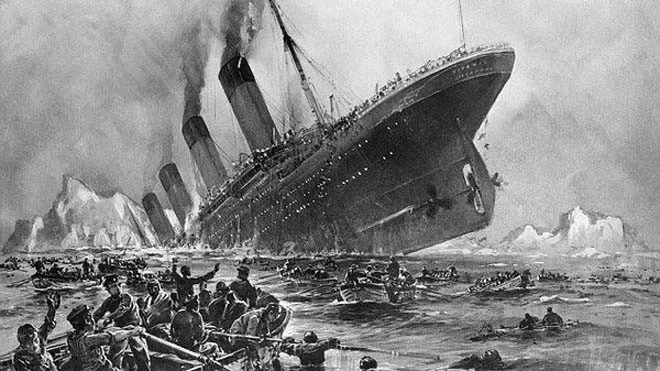
To set the stage, recall the night of April 14, 1912. The RMS Titanic, the world’s largest and most luxurious ocean liner on its maiden voyage, struck an iceberg in the North Atlantic. By the early hours of April 15, the ship had sunk, claiming over 1,500 lives in one of the deadliest peacetime maritime disasters. Survivors were rescued by the RMS Carpathia, but many bodies were never recovered, lost to the icy depths. The event has inspired countless books, films, and theories, but what if some victims didn’t die—they simply… slipped through time?
Fast forward to the late 20th century. In a twist that sounds straight out of science fiction, two individuals linked to the Titanic were reportedly found alive in the same treacherous waters, unchanged by the decades. These discoveries, if true, suggest a “time slip” where the fabric of time-space might have ensnared them, preserving them in a suspended state before releasing them back into our timeline.
The first incident occurred on September 24, 1990. Captain Karl of the Norwegian vessel Foshogen was navigating the North Atlantic near an iceberg when he spotted a figure signaling for help from a rocky outcrop. Through his binoculars, he saw a woman dressed in early 20th-century English aristocratic attire—drenched, shivering, and desperate. Rescued and brought aboard, she identified herself as Wenni Kate, a 29-year-old passenger from the Titanic. According to her, a massive wave had swept her onto the iceberg during the sinking, and she was grateful for the timely rescue.
The crew was stunned. Kate’s story seemed delusional, perhaps induced by hypothermia or fever. Yet, upon medical examination at a hospital, she showed no signs of serious illness beyond shock from exposure. Blood and hair tests confirmed her age to be around 30—impossible if she had aged normally since 1912, when she would have been over 100. Cross-referencing with the Titanic’s passenger manifest revealed a perfect match: her name, age, and details aligned exactly.
This wasn’t a hoax easily dismissed. No modern clothing, no identification from the 1990s—she appeared frozen in time. Scientists and investigators debated: Was this a case of cryogenic preservation by the cold? Unlikely, as she was conscious and coherent. Or could it be a “time vortex,” a hypothetical anomaly where time dilates or loops? Theories from quantum physics, like wormholes or parallel dimensions, were floated, but no concrete proof emerged. Kate’s case ignited global media frenzy, forcing experts to confront the limits of our temporal understanding.
Case 2: Captain Edward Smith’s Astonishing Return
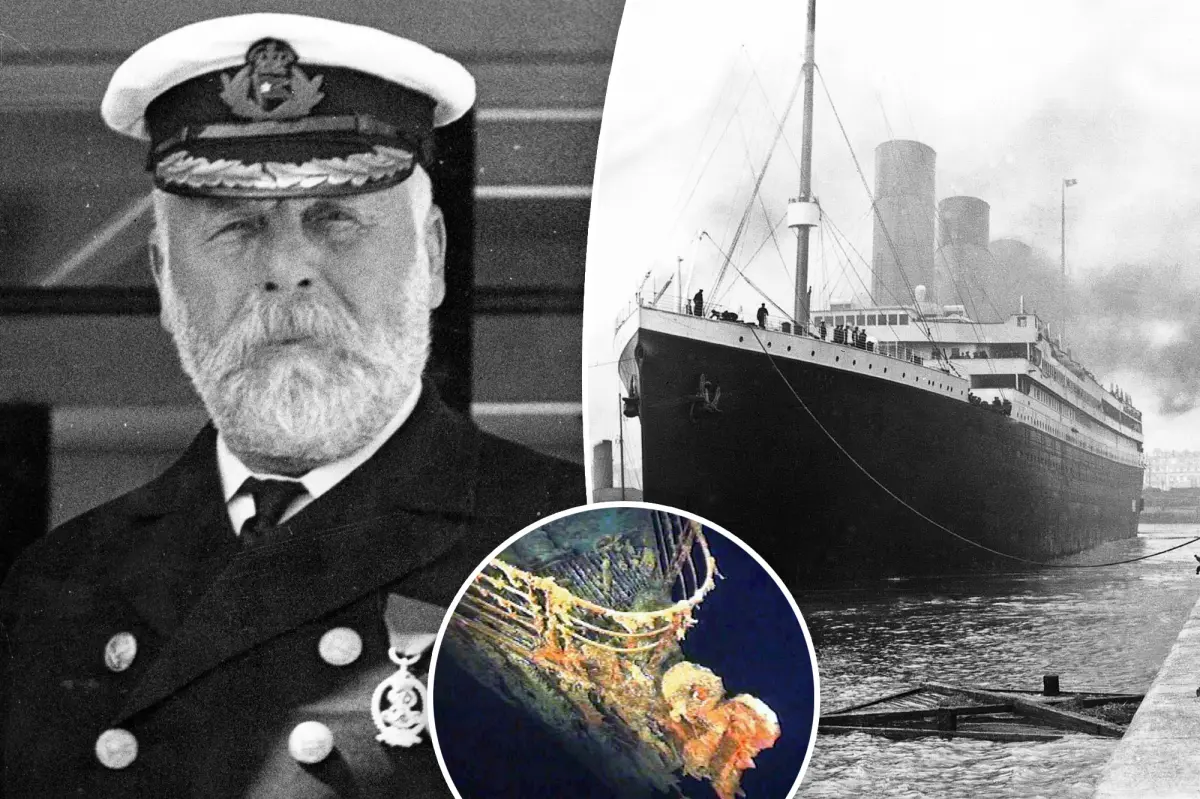
Just under a year later, on August 9, 1991, another bombshell dropped. A marine scientific survey team, operating southwest of the North Atlantic iceberg field—about 387 km from Kate’s discovery site—rescued a 60-year-old man adrift. Dressed in a neat white uniform, puffing on a cigarette, he introduced himself as none other than Captain Edward John Smith, the Titanic’s commander who famously went down with his ship.
Renowned oceanographer Dr. Marwen Iderlan, who led the rescue, described it as “the most astonishing event imaginable.” Smith, who should have been 140 years old if alive, looked and acted like a man in his prime sixties. He insisted the date was September 15, 1912—a curious slip (perhaps a memory fog, as the actual sinking was in April), but his details matched historical records impeccably. Rushed to Oslo’s psychiatric institute in Norway, he underwent rigorous tests by psychologist Dr. Jale Halant. Results? Completely normal mentally and physically. Fingerprint analysis confirmed his identity beyond doubt.